Archive for the 'Christian Formation' Category

Youth Group Presents “For All the Saints”

On All Saints’ Day, November 1, the Holy Cross Youth Group did a presentation on members’ favorite saints for the congregation at the Eucharist. It was a diverse selection of men and women from the Episcopal calendar of saints (and beyond). Each presentation was accompanied by a Power Point picture of the saint. Following are some of the offerings.

IMG_1252

paul_jonesPaul Jones (presented by Abbie Stehno). Paul Jones was born in Pennsylvania in the 1800’s. He went to Yale and the Episcopal Divinity School in Cambridge Mass. He served at a church in Logan, Utah and in 1914 was made the bishop of the Missionary District of Utah. Around this time WWI broke out. Since Paul Jones was a pacifist he spoke against it. This conflicted with the views of the church’s and was forced to resign because he was “promulgating unpatriotic doctrines.” Because he was still a bishop but without a church, he became part of the interdenominational Fellowship of Reconciliation in Manhattan. He died on September 4, 1941.


b5sDietrich Bonhoeffer (presented by Sonia Schuler). Dietrich Bonhoeffer was a German Lutheran pastor and theologian. He resisted the rise of Nazism in Germany and was found out by the Nazis after conspiring to overthrow Hitler. Bonhoeffer represented the cost of being Christian. He traveled to the U.S. and could have been free from persecution.  Against all advice he chose to go back to almost certain death and continued to preach the Gospel. When he returned to Germany he was imprisoned and wrote many hymns and letters of inspiration. Bonhoeffer was later executed on April 8, 1945 by the Nazis. Dietrich Bonhoeffer sacrificed his life to expose the Nazis’ abuse of power.


Elizabeth-Cady-StantonElizabeth Cady Stanton (presented by Monica Houghton), born on November 12, 1815, was an American social activist abolitionist, and leading figure of the early woman’s movement. Her Declaration of Sentiments, presented at the first women’s rights convention held in 1848 in Seneca Falls, New York, is often credited with initiating the first organized woman’s rights and woman’s suffrage movements in the United States. Before Stanton narrowed her political focus almost exclusively to women’s rights, she was an active abolitionist together with her husband, Henry Brewster Stanton and cousin, Gerrit Smith. Unlike many of those involved in the women’s rights movement, Stanton addressed a number of issues pertaining to women beyond voting rights. Her concerns included women’s parental and custody rights, property rights, employment and income rights, divorce laws, the economic health of the family, and birth control. She was also an outspoken supporter of the 19th-century temperance movement. Elizabeth Cady Stanton died on October 26, 1902. The Episcopal Church added to its Calendar four American women who were pioneers in the struggle for black emancipation and for women’s votes. The date chosen for commemorating them is the anniversary of the Women’s Rights Convention held in Seneca Falls, New York, 19-20 July 1848. 

lorenzo_brindisiSt. Lawrence of Brindisi (presented by Connor Houghton) was born on July 22, 1559. He was originally named Julius Caesar. When he was 16 years old, he was entered into the Capuchin Franciscan Order in Venice, Italy. It was then that he received the name Lawrence. He was ordained a priest at age 23 after already having completed studies of both philosophy and theology at University of Padua. He had an amazing gift of languages throughout his life. He could speak and read fluently in Italian, Latin, Hebrew, Greek, German, Bohemian, Spanish, and French. Because of this gift, he was able to study the Bible in its original language. He preached for the Jews in Italy because of a request from Pope Clement VIII. The rabbis there thought he was a Jew who had become a Christian because of his complete knowledge of the Hebrew language. A fifteen volume edition of his writings, eleven of them being sermons, was completed in 1956 by the Capuchins. He used many scripture references in his writings and in his sermons. Though he was a very talented scholar, and a genius of languages and other matters, he was still very sensitive for the needs of people. At age 31, he was elected to be the major superior of the Capuchin Franciscan province of Turkey. He was very good at this job. He was promoted to be the minister general of the Capuchins in 1602. He was then responsible for much of the growth and expansion of the Order. He was a peacemaker also. He was appointed to be the papal emissary, which let him travel to many countries including his native Naples. He traveled to Lisbon on this job. He got seriously ill there, and died in 1619 on his sixtieth birthday. Overall, Saint Lawrence of Brindisi had a great holy life. Not only was he a scholar, but he was also a very holy man and a priest. His devotion to God and Scripture showed a life  that is a model for Catholics and other Christians today. He was sensitive to peoples needs, and had great self discipline and appreciation for others needs. His feast day is July 21st.

A Trip to the Fair

“Anyone interested in going to the Hopkinton Fair?” usually produces a handful of the Holy Cross young people eager to join the expedition. This year was no exception. The weather was great, the food splendidly unhealthy, the rides as usual, and the fun abundant. Here is an album of photos.

IMG_1114

IMG_1118


IMG_1119

The End! (Until next year.)

Youth Group

Kids in grades 7 and up gather after breakfast at 9:15 each Sunday. Under the leadership of John Heckman, they engage in games, discussion, activities and learning. They also participate in special events at other times: parties, snow tubing, movies, shopping for Christmas gifts for the children of prison inmates, Adopt-a-Highway roadside pickups, and trips with the youth of other congregations.

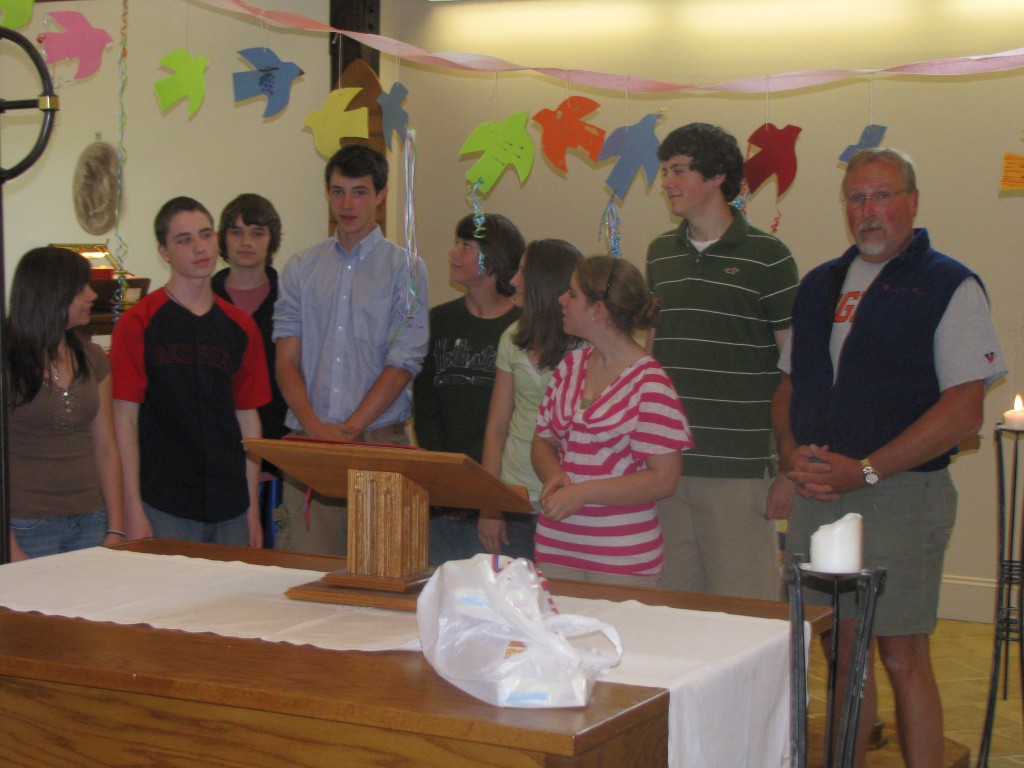
Some of the Youth Group members helped decorate the Worship Space with paper doves for the Day of Pentecost.

Some of the Youth Group members helped decorate the Worship Space with paper doves for the Day of Pentecost.


Our young people also take active roles in worship, reading lessons, playing instruments, as acolytes (servers), and occasionally helping with informal dramas. Coming from several area schools, of a range of ages, Holy Cross teens are a diverse group who enjoy each other, welcome friends and newcomers, and look on the congregation as family.

A teenager brings his guitar skills to add to Sunday worship.

A teenager brings his guitar skills to add to Sunday worship.

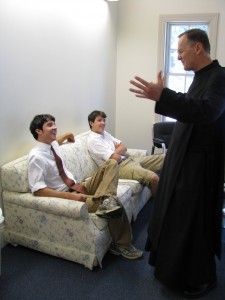
Visiting monk Curtis Almquist visits with Holy Cross teenagers.

Visiting monk Curtis Almquist visits with Holy Cross teenagers.

Youth Group Day at Lake Winnipesaukee

Thanks to the Houghtons for hosting us at their place on the lake, and to John Heckman and his son Jimmy for the transportation over and back on “The Yankee.” The pictures tell it all!

IMG_0983

IMG_0987


IMG_0990


IMG_0999

Education Opportunities for All Ages

In the Episcopal Church, it’s become customary to talk of “formation” rather than “education.” Christians are made, not born. We are formed in the ways of Christ, a process that involves hearts and hands as well as heads. Formation is lifelong. At Holy Cross, we take formation seriously, trying to offer thoughtful, enjoyable programs for all ages.

Sunday morning formation opportunities at Holy Cross include something for ages 3 through adults. During our formation year (generally early September through Pentecost in May or June), breakfast is served for the whole family beginning at 9:00 a.m. At 9:15, children and youth are invited to their formation programs. Adults lingering over breakfast begin their formation time.

Children’s Programs: Catechesis of the Good Shepherd

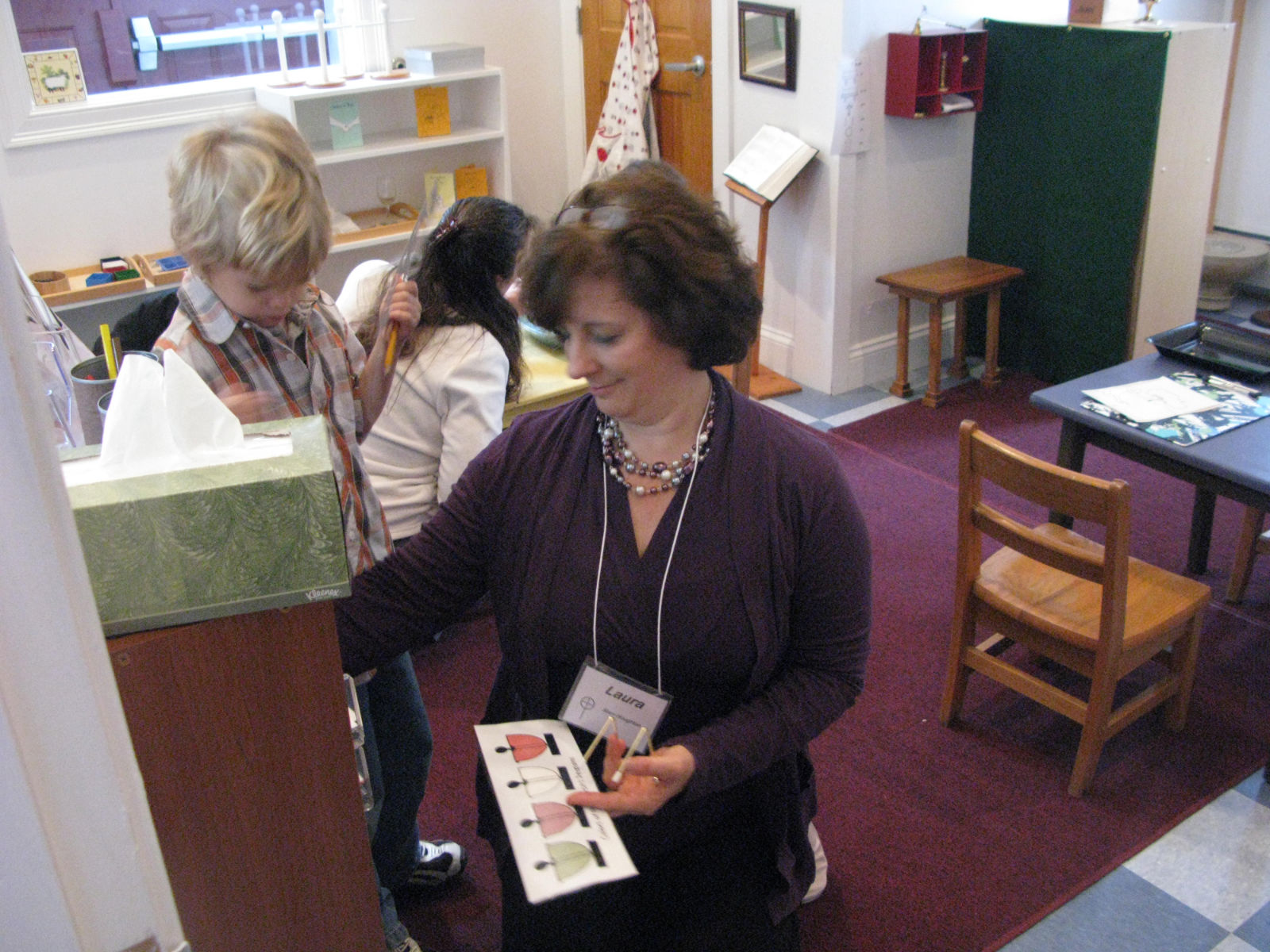
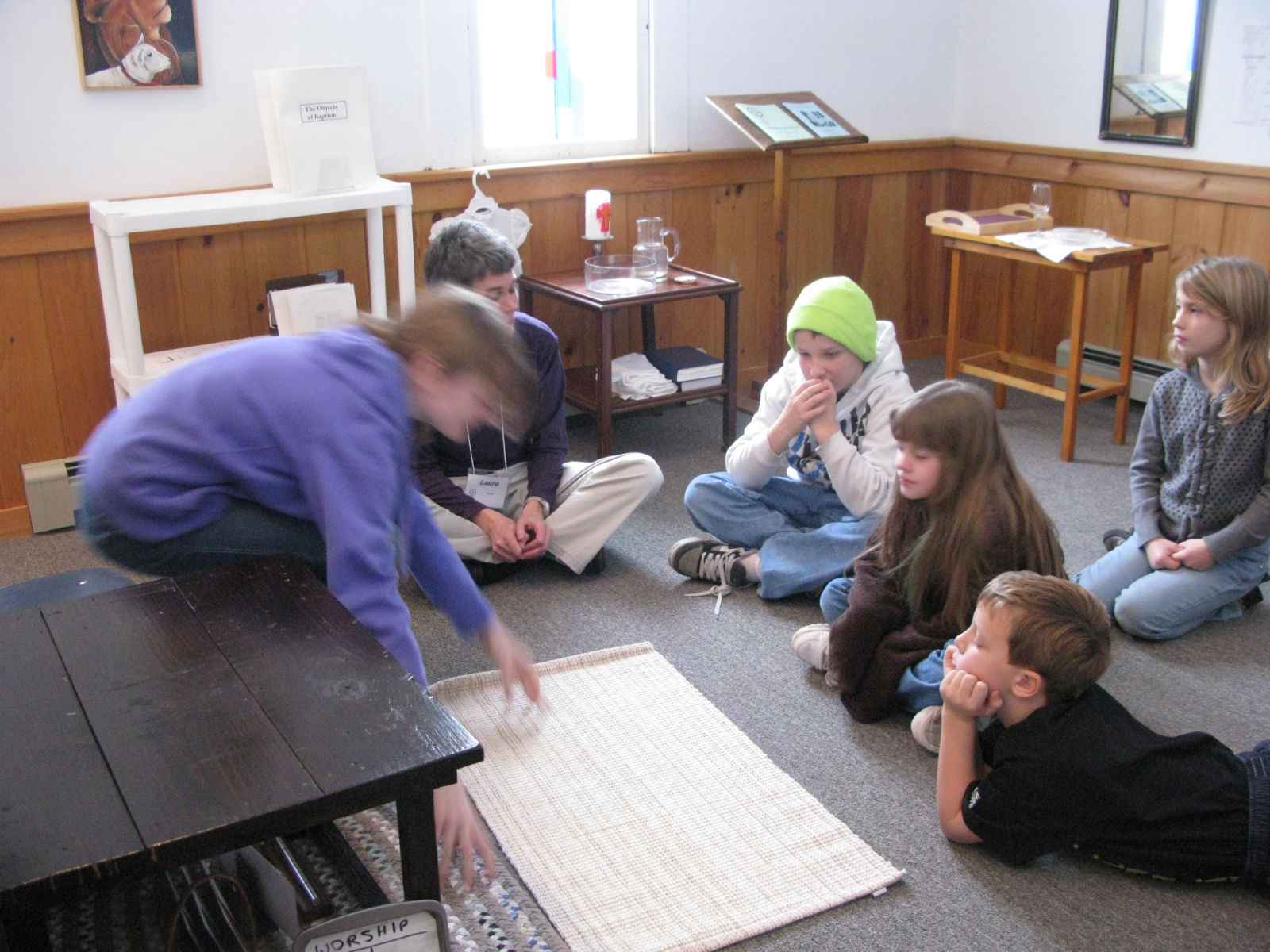
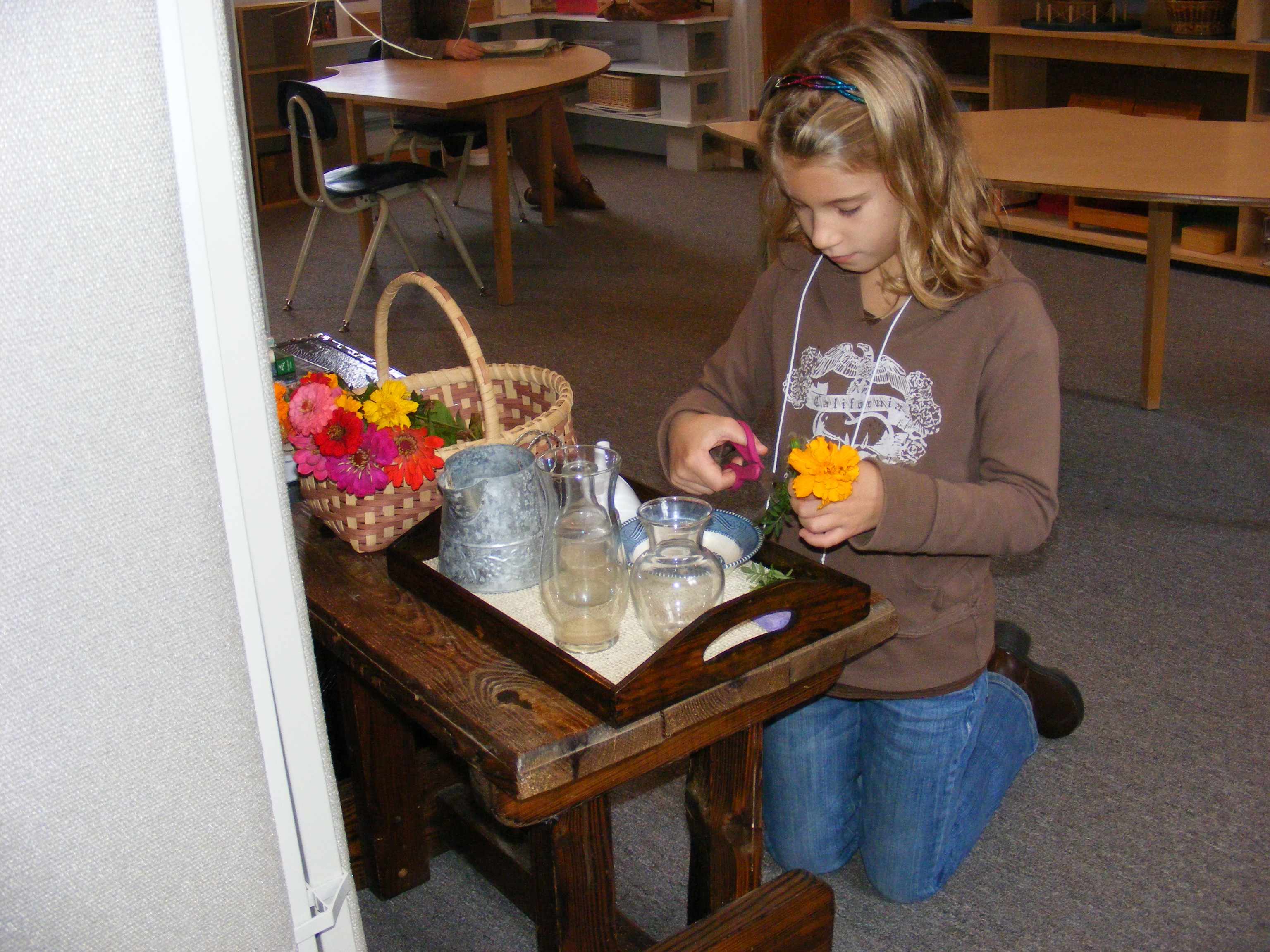
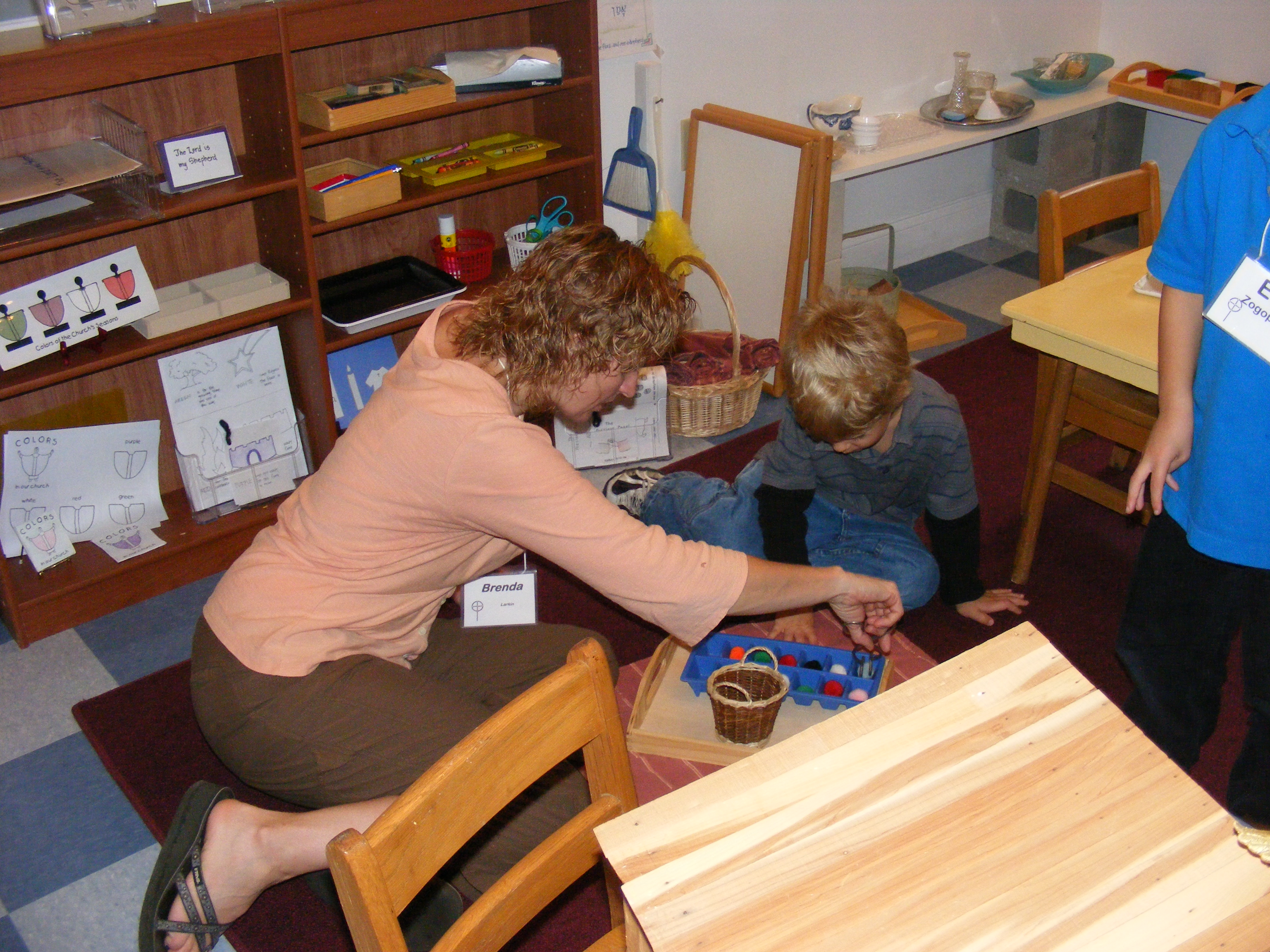
The Montessori-based Catechesis of the Good Shepherd is offered to children age 3 to Grade 6 in classrooms (called atriums) located in our old church building. During our formation year, the children enter the atriums at 9:15 a.m. and join the regular service, which begins at 10:00 a.m., at the exchange of the Peace, which is about 10:40 a.m.

Working with the parable of the Good Shepherd

Working with the parable of the Good Shepherd

The Catechesis of the Good Shepherd originated in 1954 in Rome, inspired by the Montessori principles of “self-teaching.” This approach to religious education honors the spiritual potential of children and seeks to offer the essentials of the Christian faith in a way that engages and delights them.

An interpersonal relationship is always a mystery, all the more so when that relationship is between God and the child. We believe that there is a deep bond between God and the child which produces in the child the desire to draw near to God.

The role of the catechist — the adult who is with the children in the atrium –is to prepare an environment and to make presentations that call forth the child’s response rather than pour in information. Catechists listen with the child and together ask, “God, who are you? How do you love us?”


A child explores materials in the Level 3 atrium.

A child explores materials in the Level 3 atrium.


The catechist is a co-wonderer with the children as they together enjoy meditating on the questions generated by the Scriptures with the materials in the atrium as a developmental aid.

To read more about our children’s formation program, follow check out the Website of the National Association of the Catechesis of the Good Shepherd. Anne McCausland is the catechist in the Level 3 Atrium, which is for ages 9-12, Laura Arvin is the catechist for Level 2, ages 6-9, and Laura Starr-Houghton is the catechist for the Level 1 Atrium, age 3-6.

Adult Formation at Holy Cross

Sunday Mornings

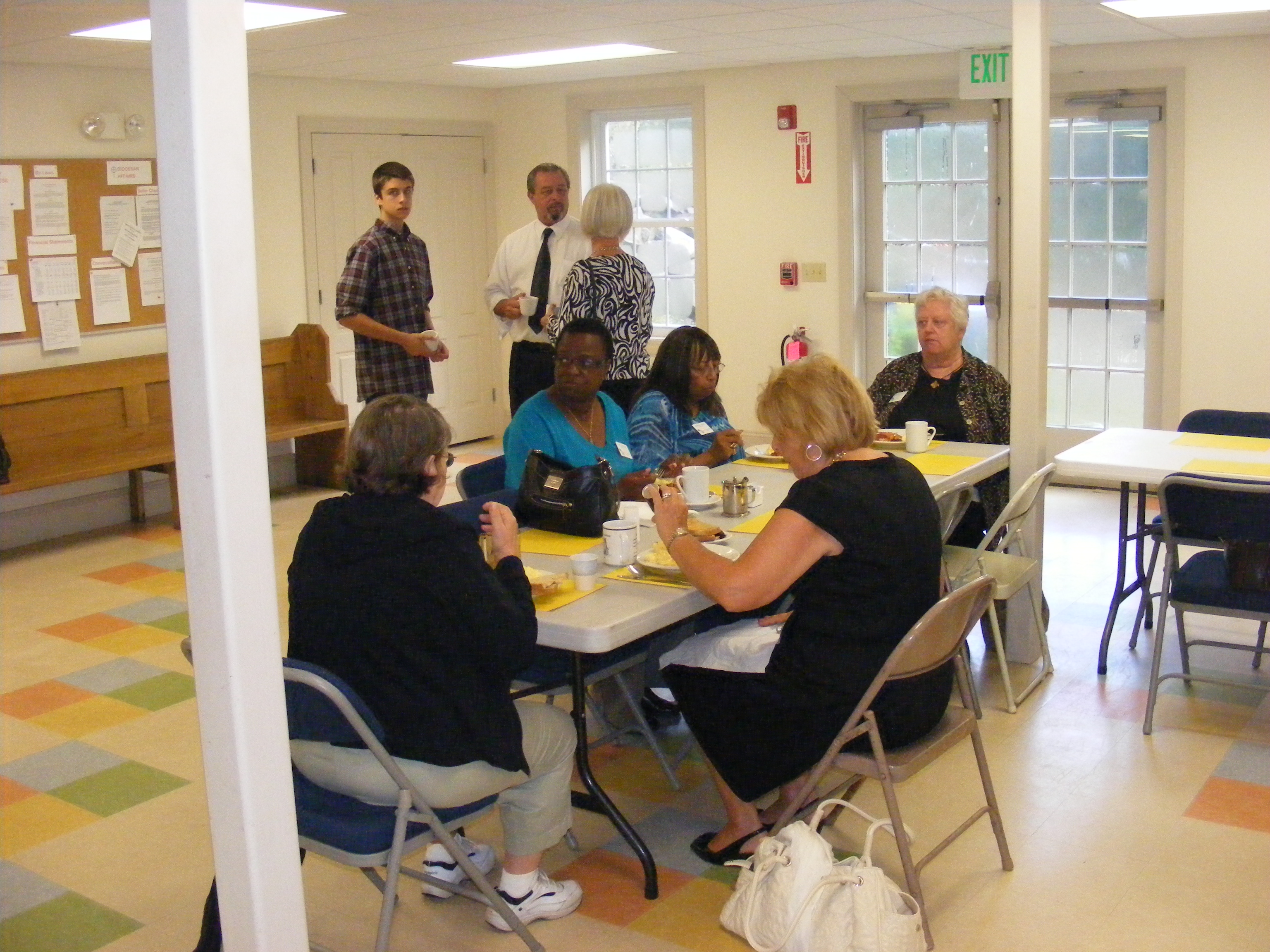
Each Sunday, after the 9:00 am breakfast and before the service begins at 10:00 am, a special time is set aside for the adults to ponder, learn, pray and plan. We speak of formation, rather than education, at Holy Cross because Christians are made, not born. Our journey into the fullness of Christ, into understanding ourselves and God’s love and purpose for us, is lifelong. So this Adult Forum time is an important part of our Sunday mornings. The topics we touch on are varied. They’re usually stand-alone, which means you aren’t going to “fall behind” if you aren’t able to make a Sunday.

img_0384

This year we’ve been spending a lot of time on getting to feel comfortable with the Bible, using as a resource Marcus Borg’s Reading the Bible Again for the First Time. During Lent, we took a breather from this study to talk about the ways in which the fear and anxiety gripping the world today, much of it hyped by our exposure to media, erodes our sense of being grounded as people of God. How could we develop Lenten practices that help us renew an appreciation of our wholeness? What is the role of silence, of simplicity, of sabbath in our lives? In May, we turn to a comprehensive review of our liturgy and worship, with the adult discussion times devoted to this area of our life.

We don’t seek one-size-fits-all answers at Holy Cross. We open questions, share experience, and search for ways to apply the wisdom of Scripture and Christian tradition to our very modern lives.


After breakfast adults enjoy learning and discussion over coffee.

After breakfast adults enjoy learning and discussion over coffee.

 Other Programs

From time to time we also offer special adult formation programs at other times. These may include Saturday workshops and weekday evening series. See Happenings Now for information about what may be going on currently.

Nursery Age Children

Children and young families are at the center of our ministry at Holy Cross.

Children and young families are at the center of our ministry at Holy Cross.

Coming to church if you have little kids is, we know, a struggle. We do everything we can to make it comfortable for both the children and their parents. Instead of providing a separate nursery, we’ve been having success with a “Godly play” area set aside in one corner at the back of our Worship Space. There children play quietly on a rug with soft toys, puzzles and picture books oriented to religious themes. Their parents sit right there. Continue reading ‘Nursery Age Children’